

INDUSTRY OPINION
Energy Transition Beyond The Grid
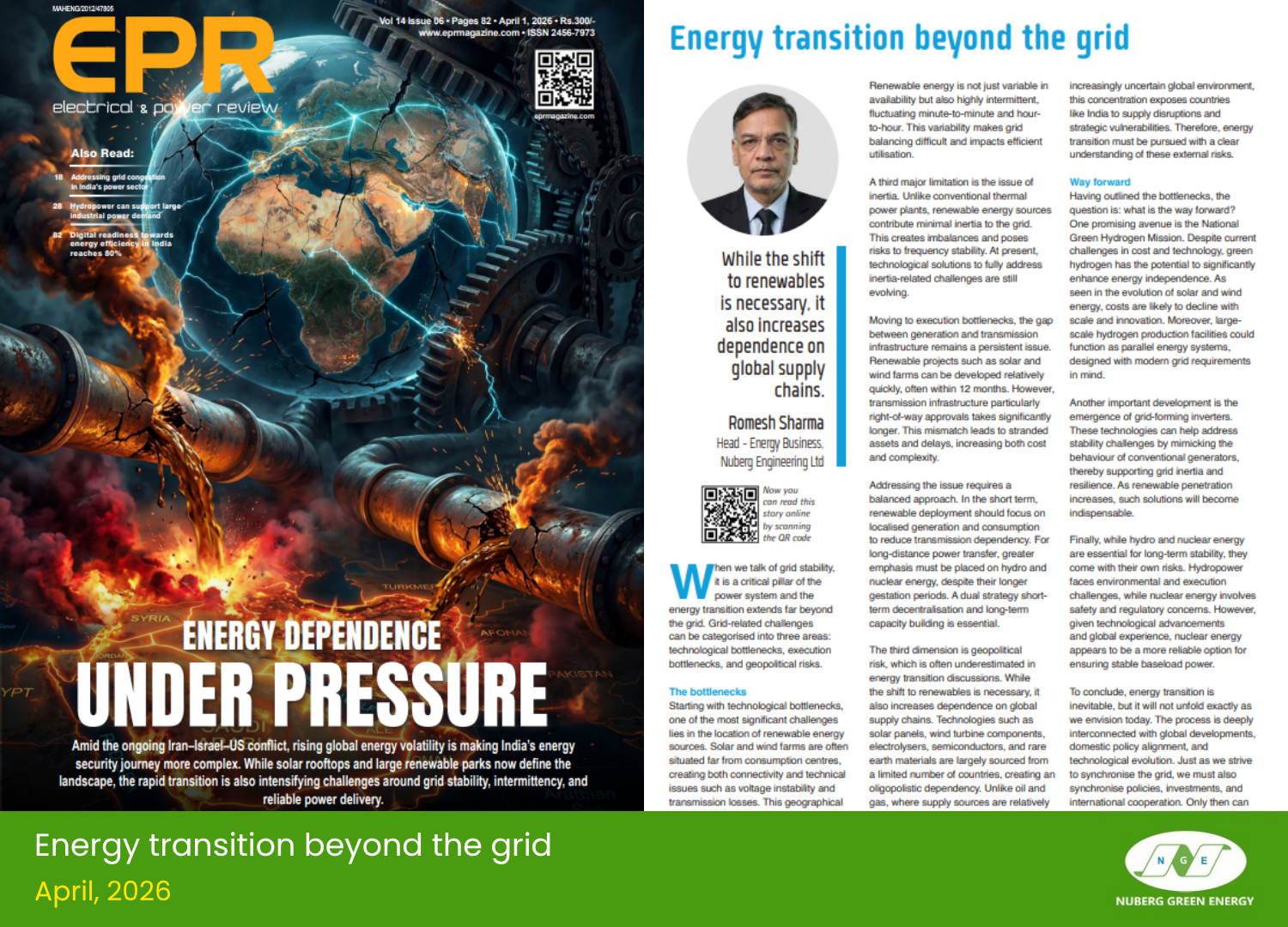
When we talk of grid stability, it is a critical pillar of the power system and the energy transition extends far beyond the grid. Grid-related challenges can be categorised into three areas: technological bottlenecks, execution bottlenecks, and geopolitical risks.
The bottlenecks
Starting with technological bottlenecks, one of the most significant challenges lies in the location of renewable energy sources. Solar and wind farms are often situated far from consumption centres, creating both connectivity and technical issues such as voltage instability and transmission losses. This geographical mismatch complicates grid integration. Another key challenge is reliability.
Renewable energy is not just variable in availability but also highly intermittent, fluctuating minute-to-minute and hour to-hour. This variability makes grid balancing difficult and impacts efficient utilisation.
A third major limitation is the issue of inertia. Unlike conventional thermal power plants, renewable energy sources contribute minimal inertia to the grid. This creates imbalances and poses risks to frequency stability. At present, technological solutions to fully address inertia-related challenges are still evolving.
Moving to execution bottlenecks, the gap between generation and transmission infrastructure remains a persistent issue. Renewable projects such as solar and wind farms can be developed relatively quickly, often within 12 months. However, transmission infrastructure particularly right-of-way approvals takes significantly longer. This mismatch leads to stranded assets and delays, increasing both cost and complexity.
Addressing the issue requires a balanced approach. In the short term, renewable deployment should focus on localised generation and consumption to reduce transmission dependency. For long-distance power transfer, greater emphasis must be placed on hydro and nuclear energy, despite their longer gestation periods. A dual strategy short term decentralisation and long-term capacity building is essential.
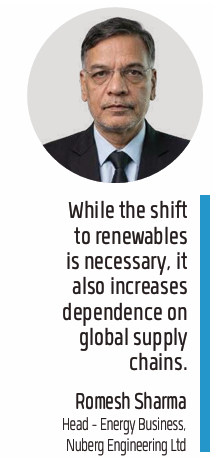
The third dimension is geopolitical risk, which is often underestimated in energy transition discussions. While the shift to renewables is necessary, it also increases dependence on global supply chains. Technologies such as solar panels, wind turbine components, electrolysers, semiconductors, and rare earth materials are largely sourced from a limited number of countries, creating an oligopolistic dependency. Unlike oil and gas, where supply sources are relatively diversified, these critical materials are concentrated geographically. In an increasingly uncertain global environment, this concentration exposes countries like India to supply disruptions and strategic vulnerabilities. Therefore, energy transition must be pursued with a clear understanding of these external risks.
Way forward
Having outlined the bottlenecks, the question is: what is the way forward? One promising avenue is the National Green Hydrogen Mission. Despite current challenges in cost and technology, green hydrogen has the potential to significantly enhance energy independence. As seen in the evolution of solar and wind energy, costs are likely to decline with scale and innovation. Moreover, large scale hydrogen production facilities could function as parallel energy systems, designed with modern grid requirements in mind.
Another important development is the emergence of grid-forming inverters. These technologies can help address stability challenges by mimicking the behaviour of conventional generators, thereby supporting grid inertia and resilience. As renewable penetration increases, such solutions will become indispensable.
Finally, while hydro and nuclear energy are essential for long-term stability, they come with their own risks. Hydropower faces environmental and execution challenges, while nuclear energy involves safety and regulatory concerns. However, given technological advancements and global experience, nuclear energy appears to be a more reliable option for ensuring stable baseload power.
To conclude, energy transition is inevitable, but it will not unfold exactly as we envision today. The process is deeply interconnected with global developments, domestic policy alignment, and technological evolution. Just as we strive to synchronise the grid, we must also synchronise policies, investments, and international cooperation. Only then can the transition occur in a stable, secure, and sustainable manner.
© This article was first published in EPR Magazine, April, 2026.
Media Gallery
EPR Magazine - Energy Transition Beyond The Grid
Download PDF
back top